Contact Us

14-16 Walsingham RoadHove, BN3 4FF

Telephone01273 735221

Care Home Discharge Hospital Crisis

By 23rd January, 2023 Care Home Comments Off

For far too long, the care home sector has been in a state of crisis. Inadequate funding and staff shortages have left care homes struggling to cope with increasing demand. This is especially true when it comes to discharging elderly patients from hospitals. The issue is further compounded by the fact that many elderly people are ending up stuck in hospitals due to a lack of suitable placements in care homes. This is a huge strain on resources, both financially and physically. In this article, we will explore the realities of this crisis, and how we can look towards solutions.

The current problem of care home discharge hospital crisis

It is estimated that there are currently around 1.4 million people living in care homes in the UK. Of these, around 70% are aged 65 or over and 30% are aged 85 or over.

The number of people aged 65 and over is projected to increase by around 20% over the next decade, and the number of people aged 85 and over is projected to increase by around 50%. This means that the demand for care home places is set to increase significantly over the coming years.

However, there is a growing problem with discharge from hospital into care homes. In recent years, there has been a significant increase in the number of patients being discharged from hospital into care homes without adequate notice or support. This has led to a number of problems for both patients and care homes, including:

– Patients being discharged without any clothes or personal belongings;
– Patients being discharged without any medication;
– Patients being discharged without any money;
– Patients being discharged without any way to contact their family or friends;
– Care homes being left short-staffed as they try to deal with an influx of new residents;
– Care homes having to make do with inadequate resources as they try to cope with an increase in demand.

This problem is only going to get worse as the population ages and the demand for care home places increases. The government needs to take action now to ensure that hospitals are adequately prepared for this increase in demand, and that care homes are adequately resourced and staffed to provide the care that their residents require.

Solutions to the problem

The current crisis in hospital care for elderly patients is largely due to the fact that there are not enough care homes available to meet demand, there isn’t always suitable care for patients to be discharged to from hospital. Add to this that hospitals are under immense pressure and are being forced to discharge patients before they are ready, which has led to a crisis in social care.

There are a number of solutions that could be implemented to ease the pressure on hospitals and improve care for elderly patients. One solution would be to increase funding for care homes, so that more places are available. This would help to ensure that patients are discharged in a timely manner and that their needs are met. Another solution would be to provide more support for family members who are caring for elderly relatives at home.

Perhaps other types of care need to be highlighted at hospital. This could include respite care, so that families can take a break from caring, and financial support to help with the costs of caring.

One solution that Fairdene Lodge Owner, Maria Welch has had direct experience with is offering a “halfway house” where elderly patients are discharged to a care home style environment designed for short-term stays where patients are assessed and the most suitable forms of care found and the patient then discharged to the correct form of care. During the height of the Covid-19 outbreak, Maria offered this facility using one of her properties – The Beach House. The objective was to keep Covid-19 out of the care homes. Patients were discharged to The Beach House from hospital where they were essentially in quarantine to ensure they did not have the virus prior to returning to their care home.

Whatever solutions are implemented, it is essential that elderly patients receive the care and support they need, in hospital, or in a care home, or after they return home. By working together, we can find a way to overcome this crisis and ensure that everyone receives the high-quality care they deserve.

Conclusion

It is evident that the care home discharge hospital crisis has become an extremely pressing issue in today’s health system. With increased pressure on resources, a critical need for more funding and trained staff, it can be difficult for those facing this issue to get the help they need. As such, it is essential that there is greater understanding of the complexities presented by this problem so that a solution may be proposed and implemented. Everyone should have access to quality healthcare no matter their age or situation – we must work together to ensure our most vulnerable citizens are receiving the best possible care to keep them safe and healthy.
What is the difference between a residential care home and a nursing home?

By 19th October, 2022 Care, Care Home, Dementia, Family Related Matters Comments Off

When it comes to a time when you need to start reviewing care options for a family member or loved one, it can be a daunting experience. There are various different options and different terminology to navigate, how do you make sure your loved one is going to be properly looked after?


One of the most commonly asked questions is, “what is the difference between a care home and a nursing home?” Put simply, a nursing home has a nurse on-site 24/7 and is therefore a better option for those with greater medical needs. However, the majority of elderly do not need this, they require more support and are no longer able to live at home independently. A care home is best for those who are unable to look after themselves properly due to old age. This may mean they are no longer able to wash themselves, they may have mobility issues or perhaps then need extra support with toileting.


A care home is able to administer drugs to those who need it, however if they require a new prescription there won’t be a nurse on site, instead, they would call a doctor to assess the resident and issue a new prescription.


Some care homes, might have an area of old age they specialise in. For us, at Fairdene Lodge, that is dementia. This means our staff have experience in looking after people suffering with dementia. They have had training to deal with the challenges that surround looking after those with dementia and the home is designed with those people in mind. For example, the corridors are colour coded to help residents navigate and we use photos and words on room doors to ensure residents can find their room more easily.


As you can imagine, having a nurse on site is expensive and therefore the fees of a nursing home can be considerably higher than those of a care home. Currently (April 2022), a nursing home is on average £180 per week more expensive, over a year this would be over £9000 more expensive than a residential care home.


So, how do you know whether your loved one needs a nursing home? The best place to start is with a needs assessment: https://www.gov.uk/apply-needs-assessment-social-services.  For Sussex the first part of the process is to fill out an online self-assessment and there is a different one for East or West Sussex: East Sussex: https://adultsocialcare.eastsussex.gov.uk/web/portal/pages/preclientasspage

West Sussex: https://www.westsussexconnecttosupport.org/s4s/FormDetails/FillForm?formid=214

Once you have completed the form a member of the social care team will get in contact to discuss your needs in more detail. Depending on what those needs are will determine the next part in the process.


We know getting the help and care you need for a loved one isn’t always easy, we are happy to help guide you through the process. If you would like to discuss your care needs (for you or a loved one), arrange a visit or have a chat about how we can help, please get in touch.

Six reasons to choose Fairdene Lodge

By 20th September, 2022 Care, Care Home Comments Off
  1. A different type of care

Each of our residents is an individual, a part of the family, and we care for them as such. Each resident has their own care plan uniquely designed for their likes, dislikes and personality. We organise entertainment and outings based on their hobbies and interests from excursions to football (playing and watching!) to trips to Marks and Spencer, even the odd boxing match.


  1. A beautiful home

Our home has been lovingly decorated and furnished to feel like home from home. With helpful colour coding to aid those suffering with dementia to find their way around. All rooms have their own Alexa (loaded with favourite music and stories) or TV for when guests prefer to be on their own.


  1. Outside Space

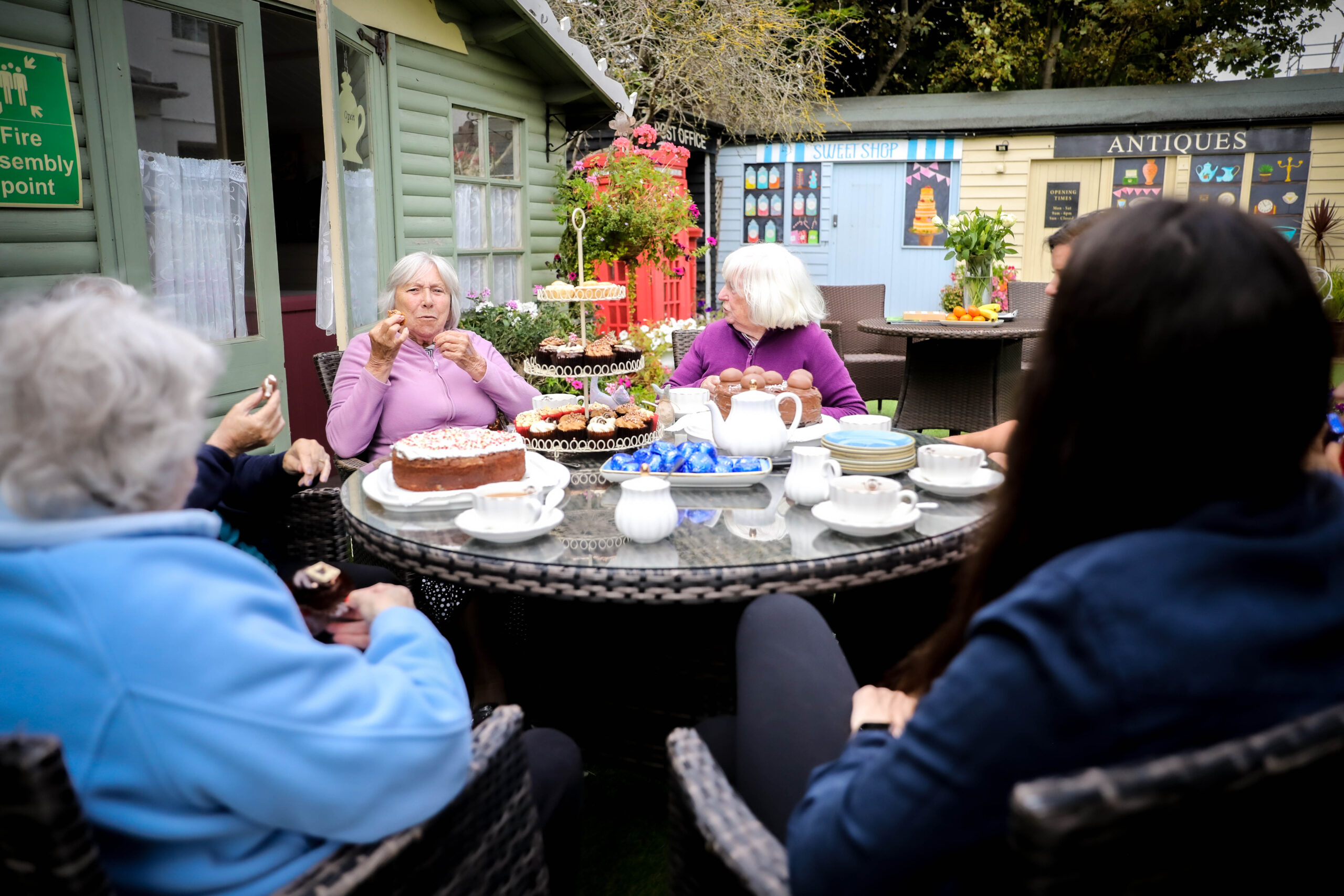
Outside we have a beautifully kept garden with flowers and plants for those green-fingered residents to get involved with, if they wish. Or simply to meet with friends, have a cup of tea or just relax in beautiful surrounding. We also have a tearoom where residents will find some tasty treats and comfy chairs to enjoy.


  1. Food fit for a King and Queen

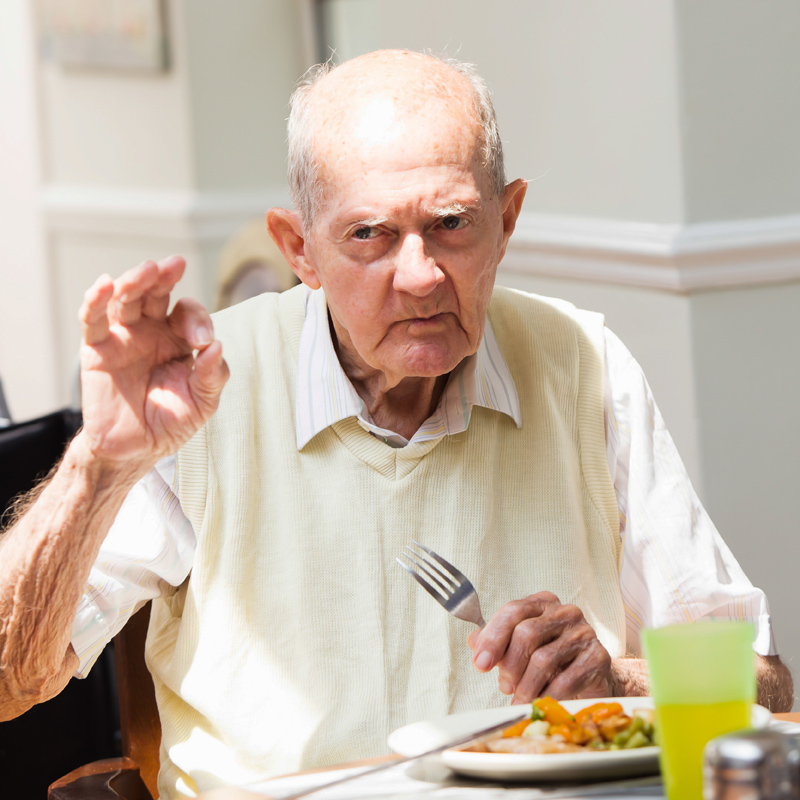
Our resident chef creates tasty, nutritious meals catering for all dietary requirements. The benefits of fresh fruit, vegetables and a home-cooked meal for those suffering with dementia have been widely documented, so we keep a balanced diet from the Med. We also have lots of tasty treats and a regular tea and cake slot!

  1. We listen

We like to involve our residents in the decision-making, taking their feedback on board to make their home… theirs! We have meetings to discuss the menu, décor, activity programme and endeavour to meet every resident’s requirements.


  1. Dementia Specialists

This is a family run business and has been a part of our family since 1984. During this time, we have grown and developed and most importantly learnt a lot, and we continue to learn. Dementia residents have different needs when it comes to care. We keep up to date with the latest research to help understand our residents and offer them the best possible care.


If you would like to discuss our home for you, a relative or someone you care for, we would be more than happy to arrange a visit or answer any questions you may have over the telephone. Please get in touch.

What is the Care Quality Commission?

By 27th June, 2022 Care, Care Home Comments Off

The Care Quality Commission (CQC) is set up to regulate all health and social care services in England. As independent regulators, their purpose is extremely simple. They want to ensure that health and social care services are provided to the highest standards possible throughout England. Moreover, they wish to ensure that people in care receive these services safely and effectively, doing everything in their power to improve the general care services industry.


How does the Care Quality Commission maintain care home standards?

A big part of what the CQC does revolves around assessing care homes to ensure they stay at a high standard. Assessments tend to involve inspections, leading to each care home receiving a rating via an inspection report. Typically, a care home inspection will involve observing the care provided by members of staff, as well as looking at people’s records to see if their needs are being managed correctly.


Following the inspection, a rating is provided on this scale:

  • Outstanding – the care home exceeds expectations
  • Good – the care home performs to the recommended standards
  • Requires improvement – the care home needs to improve its service
  • Inadequate – the care home is performing badly and action is taken against the organisation


By constantly inspecting care homes, the CQC ensures that nothing flies under the radar. It supports care homes and care providers in improving and maintaining their standards. Fines can be handed out to facilities that achieve the inadequate rating, and prosecutions can also be made in extreme cases.


The outstanding rating is given to care homes who go above and beyond to deliver the best possible level of care and has processes in place to continue to improve their service offering putting their residents and team at the heart of everything they do.


A CQC inspection is taken seriously by all those in the care industry, it is important to maintain a good level of care for all those involved. The CQC inspections and processes mean that individuals across the country will receive a higher level of care services that are built around their individual needs.


To read our latest CQC inspection, click here.

The benefits of pets or animals for the elderly

By 28th January, 2022 Care, Care Home Comments Off

The benefits of human-animal interaction have been proven in studies over many years now. There’s a reason dogs are dubbed man’s best friend; they provide friendship and companionship to their owners. But that’s not all, there are scientific studies which show that animals can have a positive effect on blood pressure, reducing stress, anxiety and improving the lives of those with Alzheimer’s disease. Therapy dogs are especially good at this and often brought into hospitals and nursing homes to help reduce patients stress and anxiety.

For the elderly one of the main benefits of having a pet is companionship.  For those living on their own life can be lonely and isolating, even more so over the last couple of years. Having a pet such as a dog or cat offers affection, loyalty and companionship which people may otherwise not have. They may go for days without seeing or speaking to anyone and a pet can be especially comforting to have around the house if they’ve lost a loved one and the house seems quite and empty. They can also bring in a routine and responsibility which may otherwise have been lost, for example feeding at regular times and exercising them.

Interacting with animals can also reduce cortisol, which is the body’s stress hormone. So even simple things such as watching the birds out of the window can reduce stress. Maybe try getting a bird feeder on the windowsill to encourage them.

Exercise is a great benefit to owning a pet, obviously depending on the type of pet, I’m not sure how much exercise you’d get watching your fish swim in the tank! But taking a dog for a walk or playing with a cat can help get you up and moving your body. It can also help with socialisation.

If mobility is an issue though caring for a dog or cat may be too much. Studies have shown that watching fish swim in a tank can also relive stress, lower blood pressure and heart rate. There has even been documented health benefits for those with Alzheimer’s disease showing improvements in alertness and eating habits. And it doesn’t need to be in a living tank, even watching fish or animals on the television have also shown to have positive effects on wellbeing.

If you are thinking of getting a pet, please remember that it is a responsibility for the owner. It can be physically demanding so a puppy with lots of energy, running in between legs might not be the best choice. Think about your situation, what you can realistically and physically manage and perhaps opt for something a little lower maintenance.

Whatever you decide, having pets in your life whether yours, borrowed or even watching wildlife on the television can benefit your health and mental wellbeing.

The different types of dementia and how to recognise the symptoms

By 10th December, 2021 Care, Care Home Comments Off

The word dementia describes a set of symptoms such as memory loss, difficulty concentrating, confusion and forgetfulness. Dementia is caused by diseases that affect the brain. Here we look at the different types of dementia and the common symptoms.

ALZHEIMER’S DISEASE 

Probably the most well-known and common form of dementia. With Alzheimer’s connections between brain cells are lost because of the build-up of proteins which build abnormal structures. It is a progressive disease and over time more parts of the brain are damaged, as this happens symptoms worsen and more develop.

Common symptoms

Memory: problems with memory may occur such as losing things, forgetting names, getting lost and difficulty recalling words.

Speech: you may find that people repeat themselves or say a different words to those they mean.

Concentration: difficulty concentrating or organising, this can make everyday tasks challenging.

Orientation: it’s quite common for people with Alzheimer’s disease to forget where they are and get lost or not remember the day or year.

Mood: mood changes are common in the early stages, and you may find they become very anxious, depressed, or easily annoyed.

VASCULAR DEMENTIA

This is the second most common cause of dementia. Some people have both vascular dementia and Alzheimer’s disease which is called Mixed Dementia. Vascular dementia is caused when inadequate blood flow can’t get to the brain due to diseased blood vessels.

Although memory loss is common in most types of dementia, it’s not usually one of early symptoms of Vascular dementia.

Common Symptoms

Concentration: people may have difficulty concentrating or organising, following simple steps and slow thought processes, this can make everyday tasks challenging.

Speech: people may become less fluent in their speech.

Mood: mood swings are also common in the early stages you may find people become anxious or depressed; this may be due to them noticing the difficulties of the disease.

Physical: loss of bladder control is common in people with subcortical vascular dementia, and they also become prone to falls often due to weakness in the body. People with post-stroke vascular dementia may have weakness or paralysis in a particular part of the body dependant on which part of the brain was affected.


FRONTOTEMPORAL DEMENTIA 

This is one of the less common types of dementia and you may know it as frontal lobe dementia or Pick’s disease. It’s caused when there is damage to the frontal or temporal lobes of the brain.

Common Symptoms

Behavioural variant FTD causes problems with behaviour and personality.

Primary Progressive Aphasia causes language problems.


MIXED DEMENTIA 

About 1 in 10 people with dementia have mixed dementia, this is when they have more than one type of dementia. The most common form is Alzheimer’s disease with Vascular Dementia.

Common Symptoms

The symptoms are a mixture dependant on the mix of types of dementia, most commonly you’ll see one set of symptoms is more dominant.


LEWY BODY DEMENTIA 

Dementia with Lewy bodies is caused by clumps of protein (Lewy bodies) in the nerve cells of the brain. Approximately 1 in 10 people with dementia have this.

Common symptoms

Concentration: problems staying focussed, making decisions and memory loss.

Hallucinations: these can be visual; seeing things that aren’t there which might be shapes, animals or people or auditory; hearing sounds or evens smelling or feeling things that aren’t there.

Sleep: problems can occur with sleep, both disturbed sleep at night and falling asleep very easily during the day.

Physical: you may see problems such as stiff limbs, limited facial expressions, being unbalanced and having difficulty walking.

There are also some rarer causes of dementia such as Huntington’s disease, Parkinson’s disease and Creutzfeldt-Jakob disease (CJD), approximately 1 in 20 people with dementia in the UK have a rarer type and symptoms can vary.

With most types of dementia however, the symptoms usually start off mild. They progress very gradually, and if you have them, you may not notice them. Dementia symptoms are different from naturally slowing down as we age, occasionally forgetting things and our thought processes generally slowing, as dementia symptoms are caused by disease. Because of this it can be hard to recognise the early stages in a friend or loved one. If you’ve noticed that a person is struggling to remember what they did the day before, is forgetting names of objects or people or perhaps they are repeating things over and over then it’s a good idea to encourage them to see their GP.

Lifting the Stigma on Elderly Care

By 22nd October, 2021 Care, Care Home Comments Off

It is a fact of life, from the moment we are born, we start getting older and if we are lucky enough to live to an old age, it is likely we may come to a point where we can no longer care properly for ourselves and we may need some extra support. And yet this is something none of us want to admit or even think about, but if we are all going to need it, why is there such a stigma around elderly care and what can we do to change future perspective?


Perhaps, by thinking negatively about getting old and frail and not being able to look after ourselves we are the problem. Constantly in the media and movies, people in older age are depicted negatively, whether it’s as a burden to the family, or someone who is unable to look after themselves, the older generations do not get painted in a good light. And yet so many of us are staying healthy and active into our older years and nothing like the old frail image portrayed by the media.


And so, if we focussed on positivity and promoting healthy living and wellbeing, using positive images of those in their older years enjoying independence and living life to the full, perhaps we would be able to adjust the perception of getting old.


And yes, there may come a time when we need a bit of extra support to look after ourselves. And this is where the care industry needs to step up. Treating each person as an individual, supporting their needs and wishes and getting to know them will help to ensure they are cared for in a compassionate and dignified manner.


We continue to promote person-centred care and maintaining independence in our home. We want all our residents to feel like they are at home, not in a stereotypical care home or “God’s Waiting Room” as they are so crassly referred to at times. We create a family home environment by including our team in the daily activities and entertainment. We also find activities and outings that are personal to our residents, for example we have one resident who used to be a boxing promoter so we take him to the local boxing gym. Another resident has given us tennis lessons while others enjoy a trip to M&S.


Getting old doesn’t have to be a sad and lonely time and we feel each of us plays our own part in removing the stigma around elderly care – come and see for yourself – our warm and friendly home will hopefully change your perspective on how growing old should be!


When is the right time to choose a care home?

By 17th September, 2021 Care, Care Home, Dementia, Family Related Matters Comments Off

It feels like there is never a right time to choose a care home, it’s a daunting and scary thought for most people, and generally it is left until the family cannot cope with the care requirements of a loved one anymore and then there is a panic to try and find somewhere with a space.

Our advice would be to prepare well in advance of a loved one needing a care home. At this stage they can even be involved in the decision-making process and you will have a greater choice of homes available to you. As you will have time to be on waiting lists, plus you will be able to get to know the home much better. The more open you can be with your family and able to discuss plans, the easier it will be when the time comes to transitioning into a home.

If the home is for you, let them know what you want, where you might like to be and the types of activities you might be interested in doing. Get to know the homes you are interested in and ask to be kept on their mailing list.

We always welcome as many visits as possible for the new potential resident and their family to get to know us and the home. We like potential residents to feel familiar with the home and comfortable in the space. They are welcome to join in activities with us and stay for periods of time to really understand what it is like to be one of our residents.

When choosing a home, try to take your time, ask lots of questions about the day to day running of the home, how they care for residents and the activity programmes they run.

At Fairdene our focus is on person-centred care, this means that we get to know each of our residents on a personal level, not just the medical care they require, we like to know what hobbies they enjoy, the job they used to do, the family they have and what makes them happy. We use this to put together meaningful activities for each resident. For example, we have one resident who used to be a boxing promoter, so we take him down to the boxing gym to see everyone and watch some of the action. This is an activity he really enjoys but is personal to him – not everyone is going to want to head down to the boxing gym!

If your loved one has already had a diagnosis of a condition that is likely to affect them into their later years such as dementia, you might like to look at care homes that specialise in that condition.

As a dementia care home, we continually research the latest on dementia care and continually look to improve our home and dementia care. We have our own in-house chef to offer the most nutritious food and ensure there is healthy food for residents to help themselves to around the home. We offer jelly drops to ensure everyone stays hydrated. Each resident is encouraged to bring a memory book with them which has photos of friends and family and things they like to do. We love sharing these with the residents and hearing their stories of days gone by.

With a diagnosis of Dementia, it might be years before the person affected actually needs a care home, however the time will come when they are no longer able to look after themselves even with the help of carers, friends and families. It would be at this point that you would need to consider moving to a care home.  In our opinion though, it should be before this point that you discuss the care home and look at the different ones available in order to know which care home is best suited to your loved one.

You might be able to register your interest and the home could keep you updated on availability as the time approaches. It may feel like a sad and scary step, however from a positive perspective, your loved one will be getting the care they need which means that you will be able to focus on your social relationship with them and it can really help to reduce the stress and tension that sometimes comes with being someone’s full-time carer.


Fun and rewarding activities for those with dementia

By 7th June, 2021 Care, Care Home, Dementia, Family Related Matters Comments Off

Caring for a loved one with dementia can be frustrating, it can be lonely and at times it can feel monotonous. This in itself can start to have a detrimental impact on your relationship, and it is so important to try and not let dementia come between you.

We’ve put together a list of activities you might want to think about to break away from the frustration and monotony and think a bit differently about how you can keep your friendship going.

Finding engaging activities can help to reduce symptoms associated with dementia such as agitation, anxiety, depression and anger.

  1. Fold towels

Now, this might not seem like an exciting or an engaging activity, however the need to feel useful continues throughout our lives and by giving those suffering with dementia an activity where they feel useful and purpose is a great way to boost self-esteem. It doesn’t matter how well the towels are folded, your loved one will feel they are contributing to the household and you are getting some of the housework done! At Fairdene Lodge, we regularly ask our residents to help us pair socks, and they love getting involved and feeling helpful.

  1. Create a memory box

We actively encourage our residents and their families to create memory boxes and books. They are great conversation starters and can help residents feel connected to their past career and hobbies.

With a memory or rummage box you can fill it with things they might have used at work or objects from hobbies. For example for a boxer, they might have a boxing glove or a gym towel. Someone who enjoyed baking might have measuring spoons, a whisk or a wooden spoon.

You can use this for any type of job or hobby, you might just need to be creative about finding objects that are safe to handle.

  1. Make (or buy) a personalised puzzle

If you want to get creative you could print a favourite family photo, that has a special meaning for your loved one. Laminate the photo and cut it into four (or more) puzzle shaped pieces to make you own personalised DIY puzzle. Alternatively, there are lots of sites online where you can buy a photo puzzle.

  1. Music

Play your loved one’s favourite songs or albums from their youth. Encourage singing and dancing. It’s amazing how a song can take us back to a certain time or memory. We have Alexas in all our residents’ rooms loaded with their favourite music and stories.

  1. Reading

You could read to your loved one, or perhaps they might enjoy an audiobook. Find things that are easy to follow and capture their interest.  Reading aloud is a great way for those with dementia to interact with children.

  1. Nature

Get out for a walk or use a wheelchair to get outside and breathe the fresh air, listen to the birds and take in the scenery. We love getting our residents out and about. We offer walks along the seafront, or rides with the Pedal People. We visit garden centres and shops, parks and cafes. We are so pleased the restrictions are lifting and we can get out and about again.

  1. Animal Therapy

Holding or petting an animal is so relaxing and we’ve seen the benefits in our home when we’ve had various furry friends to visit.

Routine is great for those with dementia, however if it is having a negative impact on your relationship, you need to change it up a little. Hopefully this article has given you a few ideas on how you might do that.

Rebuilding out of COVID-19

By 5th May, 2021 Care Home, covid-19 Comments Off

As lockdown begins to ease, this might be the first time you are able to see your relative with dementia this year. With such a long time apart changes in their condition may be more apparent and trying to ensure COVID-19 guidance is followed may be particularly hard when your focus will be making sure the person with dementia is as safe and comfortable as possible. However it is important that we continue to stick to the rules to try and ensure we don’t have to deviate from the current roadmap.

The biggest news must be the ability to now visit loved ones in their care homes. This can be two visitors (one at a time) on a regular basis (ie the same two people must visit each time). This brings with it another set of challenges… what if your mum is in a care home and you are one of three siblings, how do you choose? How do you explain to your mum, when communication is more difficult, that one of her children isn’t allowed to visit. Although not perfect, it is progress and we will continue to arrange video calling for all those who are unable to visit for whatever reason.

With the widespread launch of free lateral flow testing, we hope that COVID-19 is coming under control and we will continue to test our staff regularly. We will also ask anyone entering the home to test and await their result before they are allowed to enter. Please bear this in mind if you are coming to visit, that you will need to arrive 30minutes prior to your slot to allow time to take the test and await the results.

For the foreseeable future we will continue to live with restrictions to protect the NHS and continue to save lives, so how can you start to introduce the “new normal” and begin to socialise once again with your loved one with dementia?

  • Embrace the time you do get to spend together, bring photo albums and reminisce about happy memories. Photo albums can be a great source of stimulation and will help not only reminisce but keep your loved one in touch with what has been going on in the family during the various lockdowns.
  • Use music to help stimulate conversation – play a favourite song or a song that takes you both back to a special event or place. Whenever I hear the lambada it always brings back a memory of my nana and grandad dancing on a warm sunny evening. It’s amazing how a song can take you right back to a moment in time.
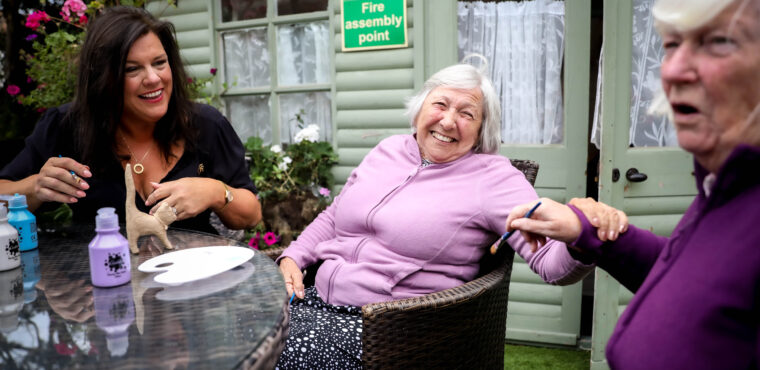
  • Get outside together, whether this is a walk along the beach, in a park, or perhaps there is an activity you enjoy together like painting in the garden, or a spot of tennis. Activities give your loved one a sense of purpose and belonging.
  • Lockdowns have given even greater focus to technology and not everyone finds technology easy to use. It might be better to have a telephone call, rather than increase stress with new technology if your loved one hasn’t got the help they need. It is a good idea to call at regular times of the day to build a routine.
  • You could also send things through the post to help with the continued feelings of isolation – the world is opening up, but it is slow and the feelings of loneliness continue. This could be a letter or a card, or perhaps you could put together a photo book with descriptions and messages from other family members.

With all the new rules and regulations and COVID-19 guidance, remember this may be confusing and worrying for someone living with dementia. Continue to be understanding and patient and help them through the transition period to when we can hopefully all be together again.