Contact Us

14-16 Walsingham RoadHove, BN3 4FF

Telephone01273 735221

The different types of dementia and how to recognise the symptoms

By 10th December, 2021 Care, Care Home Comments Off

The word dementia describes a set of symptoms such as memory loss, difficulty concentrating, confusion and forgetfulness. Dementia is caused by diseases that affect the brain. Here we look at the different types of dementia and the common symptoms.

ALZHEIMER’S DISEASE 

Probably the most well-known and common form of dementia. With Alzheimer’s connections between brain cells are lost because of the build-up of proteins which build abnormal structures. It is a progressive disease and over time more parts of the brain are damaged, as this happens symptoms worsen and more develop.

Common symptoms

Memory: problems with memory may occur such as losing things, forgetting names, getting lost and difficulty recalling words.

Speech: you may find that people repeat themselves or say a different words to those they mean.

Concentration: difficulty concentrating or organising, this can make everyday tasks challenging.

Orientation: it’s quite common for people with Alzheimer’s disease to forget where they are and get lost or not remember the day or year.

Mood: mood changes are common in the early stages, and you may find they become very anxious, depressed, or easily annoyed.

VASCULAR DEMENTIA

This is the second most common cause of dementia. Some people have both vascular dementia and Alzheimer’s disease which is called Mixed Dementia. Vascular dementia is caused when inadequate blood flow can’t get to the brain due to diseased blood vessels.

Although memory loss is common in most types of dementia, it’s not usually one of early symptoms of Vascular dementia.

Common Symptoms

Concentration: people may have difficulty concentrating or organising, following simple steps and slow thought processes, this can make everyday tasks challenging.

Speech: people may become less fluent in their speech.

Mood: mood swings are also common in the early stages you may find people become anxious or depressed; this may be due to them noticing the difficulties of the disease.

Physical: loss of bladder control is common in people with subcortical vascular dementia, and they also become prone to falls often due to weakness in the body. People with post-stroke vascular dementia may have weakness or paralysis in a particular part of the body dependant on which part of the brain was affected.


FRONTOTEMPORAL DEMENTIA 

This is one of the less common types of dementia and you may know it as frontal lobe dementia or Pick’s disease. It’s caused when there is damage to the frontal or temporal lobes of the brain.

Common Symptoms

Behavioural variant FTD causes problems with behaviour and personality.

Primary Progressive Aphasia causes language problems.


MIXED DEMENTIA 

About 1 in 10 people with dementia have mixed dementia, this is when they have more than one type of dementia. The most common form is Alzheimer’s disease with Vascular Dementia.

Common Symptoms

The symptoms are a mixture dependant on the mix of types of dementia, most commonly you’ll see one set of symptoms is more dominant.


LEWY BODY DEMENTIA 

Dementia with Lewy bodies is caused by clumps of protein (Lewy bodies) in the nerve cells of the brain. Approximately 1 in 10 people with dementia have this.

Common symptoms

Concentration: problems staying focussed, making decisions and memory loss.

Hallucinations: these can be visual; seeing things that aren’t there which might be shapes, animals or people or auditory; hearing sounds or evens smelling or feeling things that aren’t there.

Sleep: problems can occur with sleep, both disturbed sleep at night and falling asleep very easily during the day.

Physical: you may see problems such as stiff limbs, limited facial expressions, being unbalanced and having difficulty walking.

There are also some rarer causes of dementia such as Huntington’s disease, Parkinson’s disease and Creutzfeldt-Jakob disease (CJD), approximately 1 in 20 people with dementia in the UK have a rarer type and symptoms can vary.

With most types of dementia however, the symptoms usually start off mild. They progress very gradually, and if you have them, you may not notice them. Dementia symptoms are different from naturally slowing down as we age, occasionally forgetting things and our thought processes generally slowing, as dementia symptoms are caused by disease. Because of this it can be hard to recognise the early stages in a friend or loved one. If you’ve noticed that a person is struggling to remember what they did the day before, is forgetting names of objects or people or perhaps they are repeating things over and over then it’s a good idea to encourage them to see their GP.
Lifting the Stigma on Elderly Care

By 22nd October, 2021 Care, Care Home Comments Off

It is a fact of life, from the moment we are born, we start getting older and if we are lucky enough to live to an old age, it is likely we may come to a point where we can no longer care properly for ourselves and we may need some extra support. And yet this is something none of us want to admit or even think about, but if we are all going to need it, why is there such a stigma around elderly care and what can we do to change future perspective?


Perhaps, by thinking negatively about getting old and frail and not being able to look after ourselves we are the problem. Constantly in the media and movies, people in older age are depicted negatively, whether it’s as a burden to the family, or someone who is unable to look after themselves, the older generations do not get painted in a good light. And yet so many of us are staying healthy and active into our older years and nothing like the old frail image portrayed by the media.


And so, if we focussed on positivity and promoting healthy living and wellbeing, using positive images of those in their older years enjoying independence and living life to the full, perhaps we would be able to adjust the perception of getting old.


And yes, there may come a time when we need a bit of extra support to look after ourselves. And this is where the care industry needs to step up. Treating each person as an individual, supporting their needs and wishes and getting to know them will help to ensure they are cared for in a compassionate and dignified manner.


We continue to promote person-centred care and maintaining independence in our home. We want all our residents to feel like they are at home, not in a stereotypical care home or “God’s Waiting Room” as they are so crassly referred to at times. We create a family home environment by including our team in the daily activities and entertainment. We also find activities and outings that are personal to our residents, for example we have one resident who used to be a boxing promoter so we take him to the local boxing gym. Another resident has given us tennis lessons while others enjoy a trip to M&S.


Getting old doesn’t have to be a sad and lonely time and we feel each of us plays our own part in removing the stigma around elderly care – come and see for yourself – our warm and friendly home will hopefully change your perspective on how growing old should be!


When is the right time to choose a care home?

By 17th September, 2021 Care, Care Home, Dementia, Family Related Matters Comments Off

It feels like there is never a right time to choose a care home, it’s a daunting and scary thought for most people, and generally it is left until the family cannot cope with the care requirements of a loved one anymore and then there is a panic to try and find somewhere with a space.

Our advice would be to prepare well in advance of a loved one needing a care home. At this stage they can even be involved in the decision-making process and you will have a greater choice of homes available to you. As you will have time to be on waiting lists, plus you will be able to get to know the home much better. The more open you can be with your family and able to discuss plans, the easier it will be when the time comes to transitioning into a home.

If the home is for you, let them know what you want, where you might like to be and the types of activities you might be interested in doing. Get to know the homes you are interested in and ask to be kept on their mailing list.

We always welcome as many visits as possible for the new potential resident and their family to get to know us and the home. We like potential residents to feel familiar with the home and comfortable in the space. They are welcome to join in activities with us and stay for periods of time to really understand what it is like to be one of our residents.

When choosing a home, try to take your time, ask lots of questions about the day to day running of the home, how they care for residents and the activity programmes they run.

At Fairdene our focus is on person-centred care, this means that we get to know each of our residents on a personal level, not just the medical care they require, we like to know what hobbies they enjoy, the job they used to do, the family they have and what makes them happy. We use this to put together meaningful activities for each resident. For example, we have one resident who used to be a boxing promoter, so we take him down to the boxing gym to see everyone and watch some of the action. This is an activity he really enjoys but is personal to him – not everyone is going to want to head down to the boxing gym!

If your loved one has already had a diagnosis of a condition that is likely to affect them into their later years such as dementia, you might like to look at care homes that specialise in that condition.

As a dementia care home, we continually research the latest on dementia care and continually look to improve our home and dementia care. We have our own in-house chef to offer the most nutritious food and ensure there is healthy food for residents to help themselves to around the home. We offer jelly drops to ensure everyone stays hydrated. Each resident is encouraged to bring a memory book with them which has photos of friends and family and things they like to do. We love sharing these with the residents and hearing their stories of days gone by.

With a diagnosis of Dementia, it might be years before the person affected actually needs a care home, however the time will come when they are no longer able to look after themselves even with the help of carers, friends and families. It would be at this point that you would need to consider moving to a care home.  In our opinion though, it should be before this point that you discuss the care home and look at the different ones available in order to know which care home is best suited to your loved one.

You might be able to register your interest and the home could keep you updated on availability as the time approaches. It may feel like a sad and scary step, however from a positive perspective, your loved one will be getting the care they need which means that you will be able to focus on your social relationship with them and it can really help to reduce the stress and tension that sometimes comes with being someone’s full-time carer.


Fun and rewarding activities for those with dementia

By 7th June, 2021 Care, Care Home, Dementia, Family Related Matters Comments Off

Caring for a loved one with dementia can be frustrating, it can be lonely and at times it can feel monotonous. This in itself can start to have a detrimental impact on your relationship, and it is so important to try and not let dementia come between you.

We’ve put together a list of activities you might want to think about to break away from the frustration and monotony and think a bit differently about how you can keep your friendship going.

Finding engaging activities can help to reduce symptoms associated with dementia such as agitation, anxiety, depression and anger.

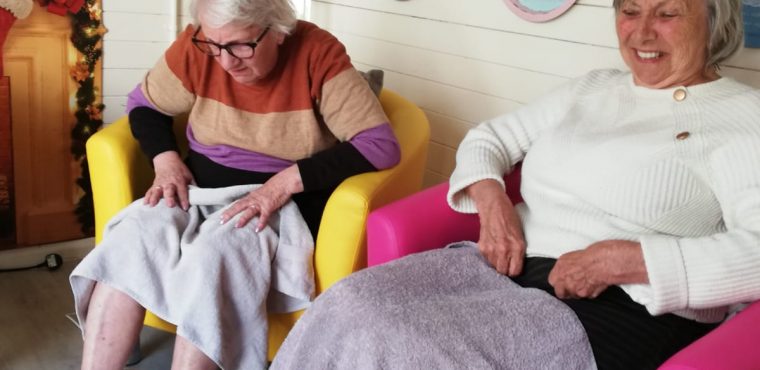
  1. Fold towels

Now, this might not seem like an exciting or an engaging activity, however the need to feel useful continues throughout our lives and by giving those suffering with dementia an activity where they feel useful and purpose is a great way to boost self-esteem. It doesn’t matter how well the towels are folded, your loved one will feel they are contributing to the household and you are getting some of the housework done! At Fairdene Lodge, we regularly ask our residents to help us pair socks, and they love getting involved and feeling helpful.

  1. Create a memory box

We actively encourage our residents and their families to create memory boxes and books. They are great conversation starters and can help residents feel connected to their past career and hobbies.

With a memory or rummage box you can fill it with things they might have used at work or objects from hobbies. For example for a boxer, they might have a boxing glove or a gym towel. Someone who enjoyed baking might have measuring spoons, a whisk or a wooden spoon.

You can use this for any type of job or hobby, you might just need to be creative about finding objects that are safe to handle.

  1. Make (or buy) a personalised puzzle

If you want to get creative you could print a favourite family photo, that has a special meaning for your loved one. Laminate the photo and cut it into four (or more) puzzle shaped pieces to make you own personalised DIY puzzle. Alternatively, there are lots of sites online where you can buy a photo puzzle.

  1. Music

Play your loved one’s favourite songs or albums from their youth. Encourage singing and dancing. It’s amazing how a song can take us back to a certain time or memory. We have Alexas in all our residents’ rooms loaded with their favourite music and stories.

  1. Reading

You could read to your loved one, or perhaps they might enjoy an audiobook. Find things that are easy to follow and capture their interest.  Reading aloud is a great way for those with dementia to interact with children.

  1. Nature

Get out for a walk or use a wheelchair to get outside and breathe the fresh air, listen to the birds and take in the scenery. We love getting our residents out and about. We offer walks along the seafront, or rides with the Pedal People. We visit garden centres and shops, parks and cafes. We are so pleased the restrictions are lifting and we can get out and about again.

  1. Animal Therapy

Holding or petting an animal is so relaxing and we’ve seen the benefits in our home when we’ve had various furry friends to visit.

Routine is great for those with dementia, however if it is having a negative impact on your relationship, you need to change it up a little. Hopefully this article has given you a few ideas on how you might do that.

Keeping normality when the world isn’t normal

By 16th October, 2020 Care, covid-19, Dementia, Family Related Matters Comments Off

This year has been one of the strangest on record and it’s not over yet. It seems Coronavirus is probably here to stay and has had the biggest impact on the care industry, this coupled with the added challenge of being a dementia specialist care home has meant trying to implement enormous change whilst trying to minimise the impact on our residents.


All the research you read about dementia always states as advice “maintain a routine” this is all well and good, but when the routine is no longer practical with lockdown restrictions and protecting the most vulnerable, what do you do? Here are some of our thoughts:


  1. Think outside the box

For those who regularly enjoy something outside of the home, which might not be available now, this could be a major disruption and may set them back in terms of their dementia and wellbeing. Could you think of recreating this activity inside the home somehow? For example, if your loved one liked to go to the local tea shop for tea and cake every Tuesday and you would rather they stayed at home, why not set a table and chairs up in their home like the tea room and bring the tea and cake to them.


If your loved one enjoyed a pamper session, bring it to them. In our home, our carers have been doubling up as beauty therapists offering a wash and blow dry, nail painting and even hosting a mini spa day in our Sweet Shop. If you can’t turn your hand to this, perhaps someone else in your family can. There are also mobile beauticians however this may feel too much of a risk.


  1. Stay Calm

It can be really worrying when there is a threat to a loved one, you just want to protect them, shut them away and hide from the outside world. If your loved one doesn’t understand the pandemic, or the seriousness of the situation, they may feel like they are being held prisoner. You need to be able to talk to your loved one in a clear and calm manner focussing on the facts to explain why your loved one needs to self-isolate. If they are adamant they want to go out, try and encourage the safest activities – a walk in the countryside perhaps?


  1. Exercise

Try and stay active, if you are lucky enough to have a large garden walk around the garden, maybe do a spot of gardening. Take a walk in a spacious country area, or if you want to stay indoors try an online gentle stretching class or how about laughter yoga online? This will benefit you and your loved ones releasing any stress and relaxing the mind.


  1. Keep routine

I know not everything in the routine can stay the same, but try and maintain those things you can – waking time, mealtimes, bedtime. Routine is so important to dementia sufferers, the more routine you can keep to, the better. If things need to change, try and introduce the changes gradually where possible.


  1. Get Creative

Perhaps now might be a good time to try something creative, painting or writing. Try to keep the mind active – puzzles and crosswords are good, as well as reading or listening to music. All of these things are known to improve wellbeing, not just for your loved one, but for you as well. Give it a try and you may end up dancing around the house!


  1. Keep talking

If your relative is in a care home and you are not allowed to visit, find other ways to communicate. Perhaps, like us, the care home could organise video calling so you can see each other (albeit on a screen). You could write a card or letter, record a video message or speak over the phone. It is important to maintain contact and we have been more than happy to arrange this at XX.


It is a challenging and uncertain time for us all as we try to adapt and look after those most vulnerable to the virus. Don’t forget your own wellbeing and to take care of yourself too.

Caring for those with Alzheimer’s

By 23rd September, 2020 Care, Dementia Comments Off

This month marks World Alzheimer’s Awareness Month and as such we thought it a poignant time to reflect on all those caring for someone with Alzheimer’s.


As a dementia specialist care home, we have a number of patients suffering with Alzheimer’s and we feel it our mission to try remove the stigma. The best way to do this is talk about it.


From speaking with the loved one’s of our residents we know it can be a lonely place caring for someone. Here are some of our tips to help:


Establish a routine

A routine can be very reassuring for those with Alzheimer’s as it helps them feel secure which reduces stress and anxiety and can even help them sleep better. Having the same morning routine for example, for basic activities such as waking up at the same time, then going to the toilet, getting dressed, brushing teeth & hair and having breakfast not only gives the day a natural flow, it can make it easier to remember to do these necessary things. Also, trying to avoid significant changes to the routine where possible as it can cause confusion and stress.


Engaging Activities

This is an integral part of caring and looking after the wellbeing of someone with Alzheimer’s. Activities can include simple things that can be done around the home such as listening to music, dancing, cooking, baking, playing board games or household chores like folding laundry and matching socks (a firm favourite at Fairdeane Lodge!). For a variation trips out like a walk in a local park, visiting family & friends or a day care centre, going for a swim or going fishing can break up the day and include some exercise and fresh air wherever possible.


Hydration & Nutrition

Ensuring those with Alzheimer’s are eating nutritious food and making sure they are hydrated are extremely important. Often the most basic things can be forgotten, not just because sometimes they can’t remember when or if they have eaten or drunk anything but because many experience a decreased appetite and lack interest in food altogether.  You can help by serving meals at the same time each day, selecting foods which are easy to chew and swallow, offering finger foods in bite size pieces which are easy to eat rather than having to use a knife and fork and encouraging your loved one to take vitamins. For hydration you can include foods with a high-water content like cucumber, tomatoes and fruits such as melon. Or you could even get some Jelly Drops, supported by Alzheimer’s UK, they are bite-size sugar-free sweets which are 95% water and electrolytes and a lovely way to keep those with Alzheimer’s hydrated.


Keep the mind active

A great way to keep the mind active is to engage in activates such crosswords, puzzles, board games and cards. Not only does keeping the mind active help delay the effects of Alzheimer’s these activities are fun and can be a great way to socialise with family and friends.


Memory books or boxes

We love memory books and boxes. It’s a lovely activity to do with the family too and often helps you learn things about your loved one that you would never have known. A memory box can help to remember special occasions, family members, activities they enjoy and favourite places to visit by using photographs, descriptions, letters, mementos and souvenirs. It can also help other caregivers understand more about the person, their family, likes and dislikes.


Take your time

Remember activities and tasks are likely to take longer than they used to, give yourself and your loved one plenty of time to complete them. Try not to rush around as that will likely cause stress and anxiety for both of you.


Caring for someone with Alzheimer’s can be very demanding both physically and mentally so taking care of yourself is also of utmost importance. Please do seek support and advice, you shouldn’t be in this alone. There are many support groups for carers so do find one local to you or online.

How do I know if it is time to think about a care home?

By 21st August, 2020 Care, Care Home, Dementia, Family Related Matters Comments Off

This post seems especially poignant as news breaks that Dame Barbara Windsor has been admitted to a care home. She looks absolutely marvellous for her age and yet she no longer recognises her husband. On the outside you wouldn’t realise anything was wrong, but for her loved ones, life has no doubt become more and more challenging, with her husband stating that her condition had worsened during lockdown. Sadly, I can imagine this might be the case for a number of Dementia suffers, the loss of routine, the inability to socialise, so many factors about lockdown does not sit well with the advice on how to reduce or slow down the effects of dementia.


I’m sure the decision to move to a care home was a difficult one for Dame Barbara’s family, however they were always very open about her condition and I’m sure as a family they had talked together about future plans. This may have made it easier for the family when the time came, as they would have known that Barbara was happy with the choice at the time.


With a diagnosis of Dementia, it might be years before the person affected actually needs a care home, however the time will come when they are no longer able to look after themselves even with the help of carers, friends and families. It would be at this point that you would need to consider moving to a care home.  In our opinion though, it should be before this point that you discuss the care home and look at the different ones available in order to know which care home is best suited to your loved one.


You might be able to register your interest and the home could keep you updated on availability as the time approaches. It may feel like a sad and scary step, however from a positive perspective, your loved one will be getting the care they need which means that you will be able to focus on your social relationship with them and it can really help to reduce the stress and tension that sometimes comes with being someone’s full-time carer. I imagine that Dame Barbara Windsor will be flooded with visitors and that’s how we like it (when we can) in our homes.


If you are interested in finding out some more about our care homes and how we run, please do not hesitate in contacting us.

Preparing for the next step

By 29th July, 2020 Care, Care Home, Family Related Matters, Help Comments Off

Taking the decision for a loved one to move to a care home can be a scary and upsetting thought. It is often filled with guilt, you may have spent years caring for them and so it is understandable that taking a step back from that role can be very challenging. Ensure you get support from your friends, family and the care team who will be stepping in. You can still be involved in their care, and work with the new team to ensure your loved one is happy and settled in their new setting.


None of us want to admit we can’t cope any more or that we need more support. As we get older it is inevitable that we might need more care and it is important to ask for this help when you need it rather than wait until something happens and you have no choice in the matter.


By creating a plan and taking time to visit different care homes or looking at the different care options you can have control over the decision making. This will give you and your family time to prepare for the next step and also in a lot of cases care homes and care teams may have a waiting list.


Here are some tips to help you in the decision-making process if you feel a care home is the next step:


  1. Involve the person in the decision

Although you may feel that your loved one does not have the metal capacity to make the decision in their care, it is important to try and involve them in the process. If they are no longer able to communicate you might be able to see different reactions as you tour around different homes which may help guide your decision and also make the transition easier for your loved one.


Due to COVID it might not be possible to have a tour of the care home right now, however the majority have websites, so take a look at the photos on their site, read about their ethos and how they care for their residents. Arrange a video call with the care home manager to ask all the questions you have and to get a feel of how the home is run and the activities that might appeal to your loved one.


Perhaps there is an opportunity for your loved one to join in some activities each week prior to the move so they can get to know some of the residents and become familiar with the home. This would make the transition feel less daunting for everyone involved.


  1. Choosing the right home

This is the big one, and no doubt the most daunting decision ahead of you. There are lots of resources available on the internet to help you make that decision, but I would draw your attention to Age UK. They have a video to help: https://www.ageuk.org.uk/information-advice/care/arranging-care/care-homes/help-finding-care-home/


They also have a list of questions that you might want to include during the process which you can find here: https://www.ageuk.org.uk/information-advice/care/arranging-care/care-homes/choosing-care-home/

It also has a handy downloadable checklist. By having a checklist and a standard set of questions for each home it will give you a good basis for comparison.


Choosing a home is very much a personal thing, so try to get as much of a feel for daily life as you can, ask about routine and activities, outside space, activities available outside of the home and see if you can picture your loved one enjoying themselves there. If you do get the opportunity to have a tour of the home get a feel for the staff, are they interested in the residents, are they caring, does the home feel welcoming? It may be difficult to do this in current circumstances, however if you are planning in advance perhaps ask to be contacted once they are doing show arounds again.


  1. Once you have chosen

At this stage the care home should arrange to come and meet your loved one or invite them to the home to meet with some of the team. As I mentioned earlier, if you have some time before the move, it might be nice to arrange a few afternoons or mornings where your loved one spends time at the home getting involved in some of their activities.


During their visits try to give the home as much information about your loved one as possible, this includes how and where they grew up, family, partner, work, interests, hobbies, achievements, music, films. On the Dementia website you could go through the process of creating your loved one’s life story. This is a lovely thing to do together, but don’t try doing it all in one sitting, break it into topics and collect photos to go with the stories. Spending time going through old photos reminiscing is something we love to do at Fairdene Lodge and having life stories helps us to start the conversation with our residents.


  1. Moving Day

Try to reduce anxieties and pick a time in the day which you feel will work best for your loved one. If they feel reluctant you could could start with a shorter respite stay to see how they get on.


Make their room homely, put up photographs of loved ones and ornaments and sentimental pieces from home around the room. Finding the right time to leave can be hard, however the care home will be very experienced in this, so talk to them and discuss when they feel is the best time.


Let your loved one know you are leaving and when you plan to return and feel free to call the home and check how they are settling in.


  1. Settling in

Some care homes ask friends and families not to visit in the first week so they can get your loved one settled. This can feel difficult, however you can phone and check how it is going. When you do visit, encourage your loved one to develop relationships with the other residents and get involved in activities. We are always happy to include visitors in our activities – if you have a skill or hobby you could even host your own activity session.


If you would like any advice about introducing a loved one to our care home, please do not hesitate in contacting us.

Caring for those with Alzheimer’s

By 5th September, 2019 Care No Comments

This month is Alzheimer’s awareness month, so we will focus on this on our blog, offering a little advice for those caring for loved ones with Alzheimer’s or another form of dementia.

Living with Alzheimer’s or any form of dementia has a big emotional, social and practical impact on a person and those around them. The way a person with dementia feels and experiences life is down to more than just having the condition. The relationships that person has, their environment and the support they receive shapes a person’s experience. Therefore if you are able to recognise this and be as supportive as possible, this will help the person living with Alzheimer’s.

You can help this person to feel valued and included, but this support needs to be sensitive to the person as an individual and focus on promoting wellbeing. This is what we try to achieve at Fairdene Lodge. Our focus really is on person-centred care – treating the person as an individual and finding a care plan that suits their needs and interests. Each person is unique with their own life history, personality, likes and dislikes. At Fairdene Lodge we get to know each of our residents before and when they move in to make the transition as easy as possible and so that they feel we are a home from home.

Although dementia affects people differently, there are a few things to consider when caring for your loved one which focus on reducing the frustrations for both of you:

  • Schedule: Establish a daily routine. Some tasks are easier when the person is most alert and refreshed, so plan tasks and appointments around those times where possible and be flexible to adapt to the person each day – if they are having a bad day – rearrange plans as much as possible
  • Time: Understand that tasks may take more time than they used to so allow more time, so you don’t feel rushed which could cause frustration.
  • Involve: Allow the person with dementia to do as much possible without always stepping to do everything for them. Could they dress themselves if you laid the clothes out on the bed in the right order?
  • Choice: Allow choice without overwhelming. Perhaps offer a choice between two items. For example ask if they would prefer to go for a walk or watch TV.
  • Instruction: Keep instructions simple. People with dementia prefer clear, one-step communication.
  • Distraction: Minimise distractions such as the TV at mealtime and during conversations to help your loved one focus.

There may reach a time when it is no longer safe for your loved one to live independently, and this is a tough time for you both, however we will support you both through this transition, getting to know you and understand your loved one’s personality and what they enjoy. We get our residents involved in the running of the care home as much as possible involving them in the weekly shopping choices, gardening, setting the table, pairing socks – whatever they would like to be involved in! We also have more elaborate entertainment, like when Elvis came to visit, to grant one resident’s wish.

We also have outings for those who are able, and tailor these to the individual, whether that’s a cup of tea by the sea, a spot of shopping or a trip to the local DIY shop. All our residents are different and enjoy different activities and we hope that if you visit you will see that our care is truly person-centred.

Did you know Tea had all these benefits?

By 7th March, 2019 Care Comments Off

Drinking tea is quintessentially British and a big part of daily life in our care home, but have you ever thought about the benefits your average cuppa has to offer? From medicinal benefits, to positive effects on mental health and even helping fight against illness and cancer. We love a good cuppa at Fairdene Lodge, and there’s nothing more soothing than sitting down with a nice fresh brew and a bit of company.

For us here, the main benefits are its calming effects, routine and sociable aspects of having a cup of tea. Here are some of the many other benefits that drinking tea may have – although many of them are still theories, we like to think a good old fashioned cup of tea is doing us the world of good.

  • Tea keeps us young. Antioxidants contained in tea can help slow down the ageing process and help your cells to regenerate and repair. Teas of all varieties contain high levels of antioxidant polyphenols that can help keep your body healthier and some studies suggest even ward off some cancers.
  • Tea lowers stress hormone levels. Black tea has been shown to reduce the effects of a stressful event. This might be why the British response to any drama is to offer a cup of tea!
  • Tea can cause a temporary increase in short term memory. Not feeling on your game today? Try drinking some tea. The caffeine it contains may give you the boost you need to improve your memory, at least for a few hours.
  • Tea may reduce your risk of heart attack and stroke. Tea helps to prevent the formation of dangerous blood clots which are very often the cause of heart attacks and strokes. Some studies have even found that black tea drinkers were at a 70 percent lower risk of having a fatal heart attack.
  • Tea is calorie-free. Tea itself has no calories unless you choose to add sweeteners or milk, making it a satisfying, low-cal way to wake up and maybe even shed a few pounds. Unless, like us you enjoy a cake or biscuit with your brew!
  • Tea can help prevent arthritis. Research suggests that older women who are tea drinkers are 60 percent less likely to develop rheumatoid arthritis than those who do not drink tea. The same effect has not been measured in older males, however, but additional studies may prove otherwise.
  • Tea may reduce the risk of Parkinson’s Disease. New studies are suggesting that regular tea consumption may help protect the body from developing this neurological disorder.
  • Tea can lower blood sugar. Tea contains catechin and polysaccharides which have been demonstrated to have a noticeable effect on lowering blood sugar.
  • Tea can prevent iron damage. Those suffering from iron disorders may be helped by drinking tea, which contains tannins that limit the amount of iron the body can absorb.
  • Tea can help with nasal decongestion. If you’ve got a bit of a cold, drinking black tea with lemon may help clear up some of the congestion.

Now there’s 10 good reasons to go and stick the kettle on!

Also this week is Dementia UKs 10th anniversary of “Time for a Cuppa” so why not raise some money for a great cause and enjoy the health benefits of a few cups of tea with some friends or colleagues?